How Carbon Filters Work
Carbon filtration is the most common type of residential water filter. It works through a process called adsorption — not absorption. Where absorption pulls contaminants into a material (like a sponge), adsorption binds contaminants to the surface of activated carbon through electrostatic and chemical attraction.
Activated carbon is made by heating carbon-rich materials (coal, coconut shell, wood) to extremely high temperatures in the absence of oxygen. This creates a highly porous material with an enormous surface area — a single gram of activated carbon can have a surface area of 500–1,500 square metres. That surface area is what makes it so effective. Contaminant molecules passing through the filter are attracted to the carbon surface and held there, leaving cleaner water to continue to your tap.
There are two main types of activated carbon filter used in residential systems:
- Granular Activated Carbon (GAC) — loose carbon granules that water flows through. Effective for chlorine removal, taste and odour, some pesticides and herbicides. Flow rate is fast and filter life is good.
- Carbon Block — compressed carbon powder at a specific micron rating. Effective for everything GAC removes, plus sediment, a greater degree of chloramine removal, and at sub-micron ratings, bacteria filtration. More thorough contact between water and carbon means better contaminant capture.
What carbon filters remove: chlorine (>99%), chloramines (partial; better with carbon block), sediment, taste and odour compounds, some heavy metals, some pesticides and herbicides, some disinfection byproducts.
What carbon filters do not remove: fluoride, nitrates, dissolved heavy metals at the ionic level, PFAS (partial removal only), bacteria and viruses (unless sub-micron carbon block is used).
For most Sydney households, a quality carbon block system like the Pure Essential twin-stage ($550) delivers an immediately noticeable improvement in taste, removes chlorine comprehensively, and is a simple, low-maintenance solution that works in any property type.
How Reverse Osmosis Works
Reverse osmosis is the most comprehensive residential water filtration technology available. It works by forcing water under pressure through a semi-permeable membrane with pores of approximately 0.0001 microns — far smaller than any contaminant molecule. To put that in perspective, a human hair is roughly 70,000 times wider than an RO membrane pore.
This physical separation process requires no chemicals. It simply forces water molecules through the membrane while blocking everything larger — which includes virtually all dissolved contaminants. The clean, filtered water (called the permeate) flows to a pressurised storage tank, while the concentrated waste stream (the concentrate) is flushed to drain.
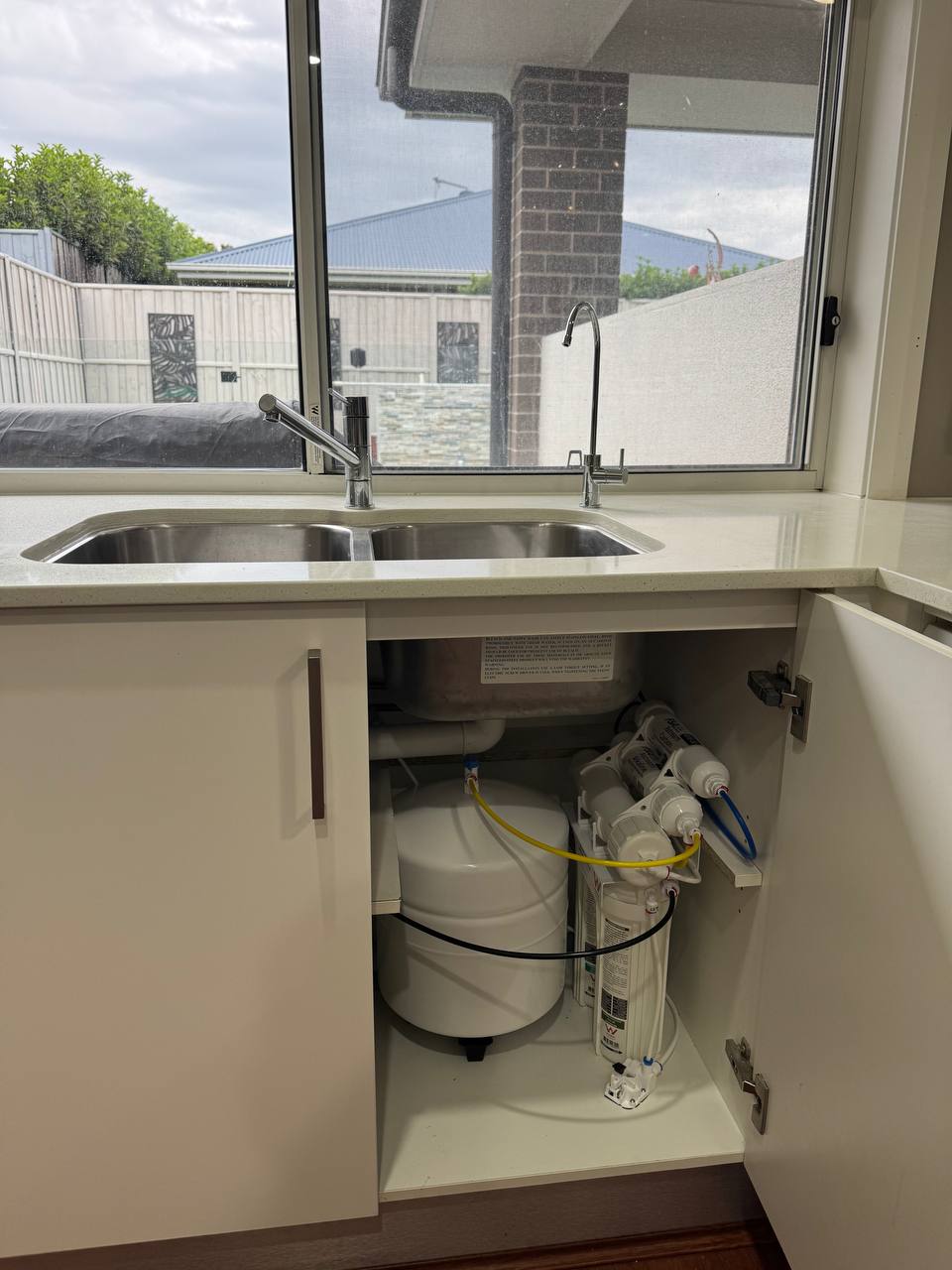
A residential RO system consists of multiple stages working in sequence:
- Stage 1 — Sediment pre-filter: Removes particles, rust and sediment that could physically damage or clog the RO membrane. Typically rated at 5 microns.
- Stage 2 — Carbon pre-filter: Removes chlorine and chloramines before the water reaches the membrane. These chemicals would degrade the membrane over time.
- Stage 3 — RO membrane: The critical stage. Water is forced through the semi-permeable membrane at pressure. Dissolved contaminants at molecular level are rejected and flushed to drain.
- Stage 4 — Post-filter: A carbon polishing stage that removes any residual taste or odour from the pressurised storage tank before the water reaches your tap.
- Additional stages (5–7 stage systems): Remineralisation cartridges add calcium and magnesium back into the purified water, improving taste and restoring alkalinity. Alkaline stages raise pH. Smart monitoring stages (Pure Luxe) connect to an app for live water quality tracking.
RO stores filtered water in a pressurised tank (typically 3–8 litres) so there is always water ready at the tap. Flow rate is slower than direct tap water, but the tank ensures you are never waiting when you want a glass.
What RO removes: chlorine (>99%), chloramines (>99%), fluoride (>95%), nitrates (>85%), heavy metals including lead, arsenic and mercury (>95%), PFAS (90–99%+ depending on compound), microplastics, bacteria and viruses (99.9999%), total dissolved solids (up to 98% reduction). The water produced is genuinely comparable to premium commercial bottled water.
What RO does not remove: some dissolved gases including CO2, which affects pH but not health. Higher-stage RO systems with remineralisation stages address this by restoring alkalinity and minerals after the membrane stage.
How Whole House Filtration Works
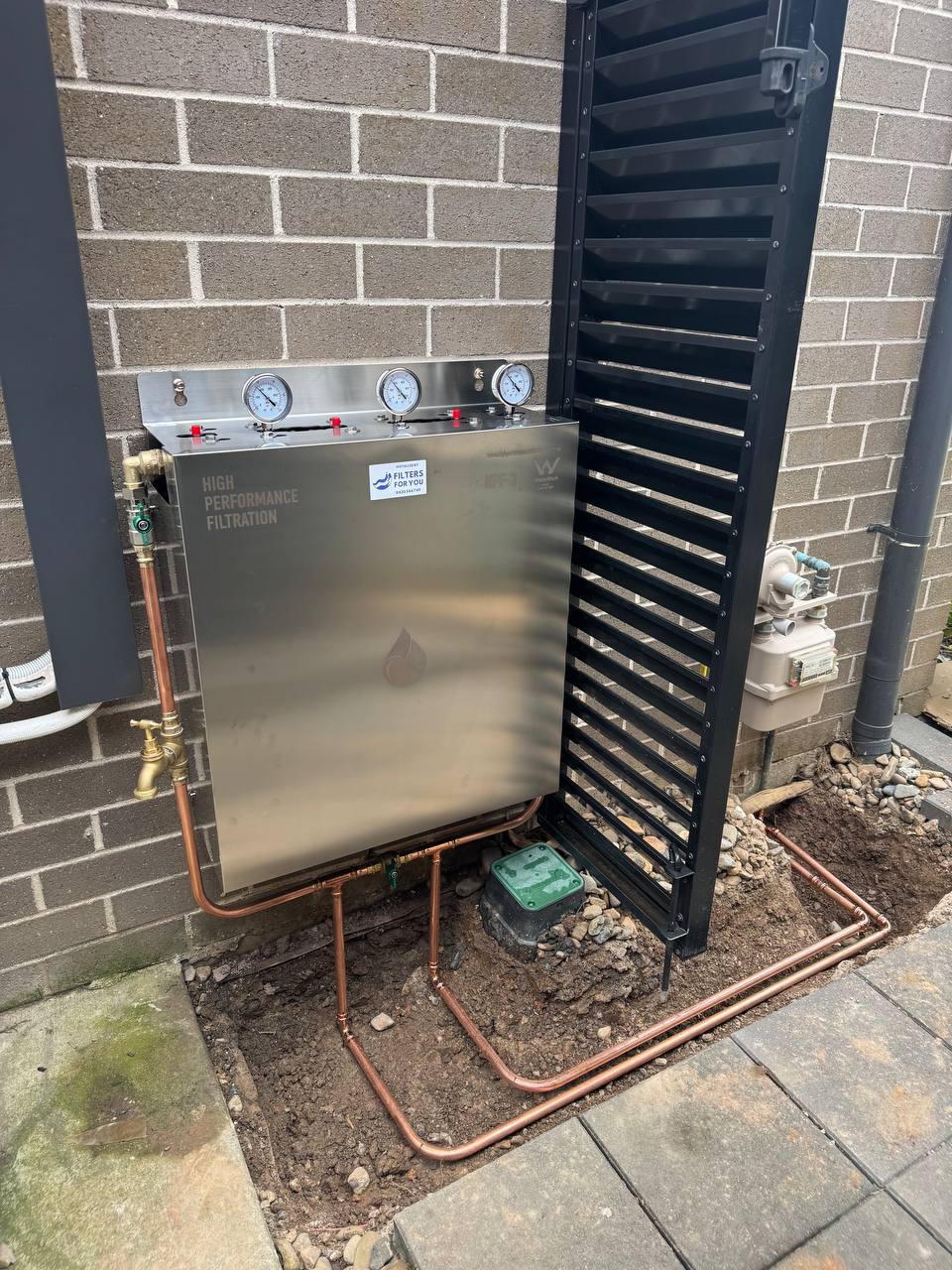
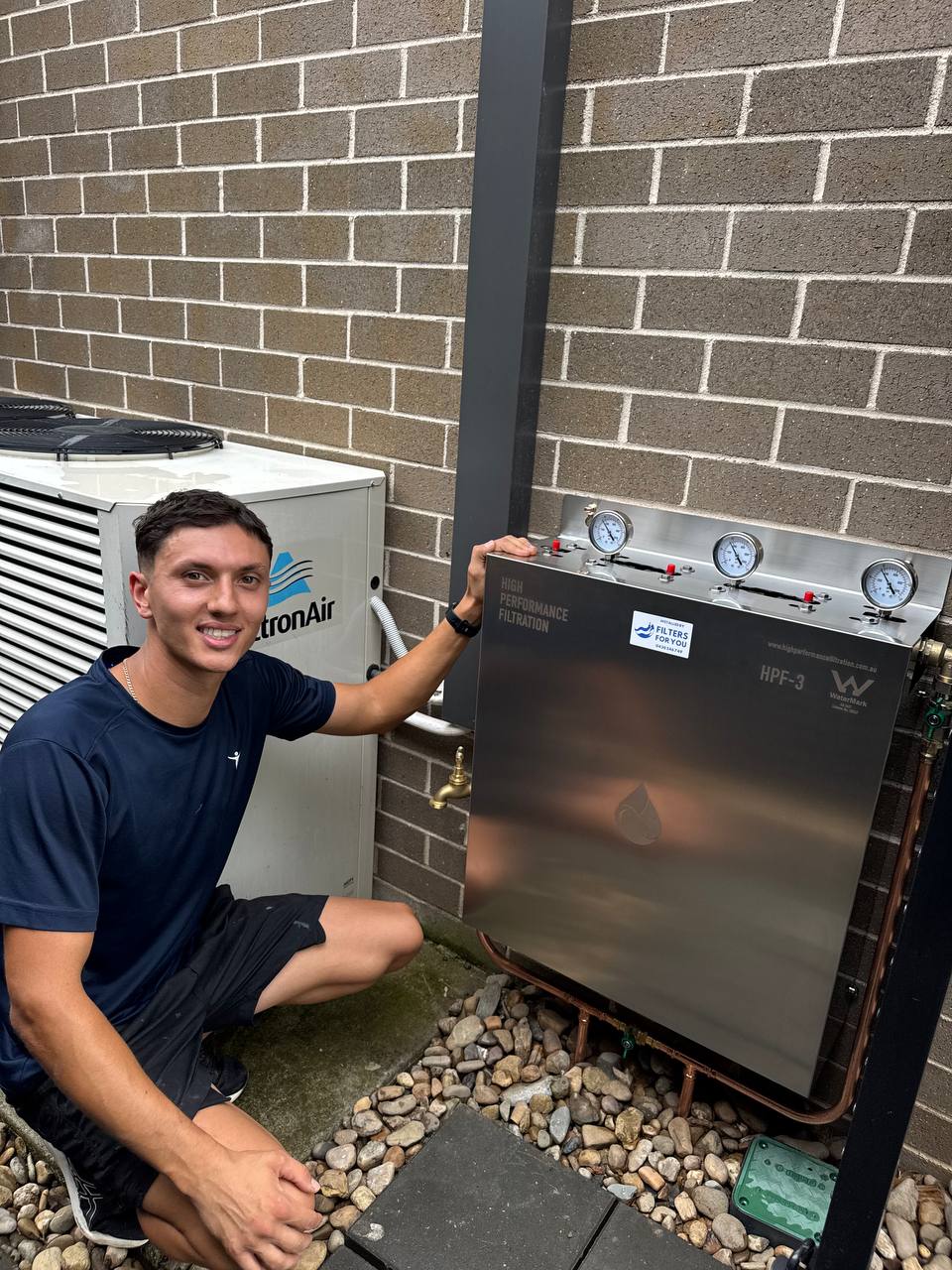
The HPF-3 High Performance Filtration System installs on the main water supply line, typically near the water meter or where the service pipe enters the home. From that single installation point, all water entering the property passes through the system before reaching any outlet — every kitchen tap, bathroom tap, shower, bath, dishwasher, washing machine and refrigerator water dispenser.
The HPF-3 uses multi-stage media filtration including sediment filtration, activated carbon media, and specialty filtration media targeting specific contaminants. It removes chlorine, sediment, microplastics, and organic compounds from every outlet in the home without affecting water pressure.
The benefits extend beyond drinking water. Shower water is filtered — chlorine is a known skin and hair irritant, and its removal has measurable benefits for skin hydration and hair condition, particularly for children and people with sensitive skin. Appliances like dishwashers and washing machines operate with filtered water, extending their service life and improving wash quality. Ice makers and refrigerator water dispensers are automatically covered.
Whole house systems use larger capacity media than under-sink filters, meaning longer service intervals between cartridge replacements. However, they deliver lower contaminant removal than RO for drinking water — they do not remove fluoride or dissolved heavy metals at ionic levels. The most comprehensive approach for Sydney households is a whole house HPF-3 as a primary filtration layer, combined with an under-sink RO system at the kitchen tap for drinking and cooking water.
Choosing the Right Water Filter for Your Sydney Home
The right system depends on what you want to achieve. Here is an honest guide:
- Want better taste and to remove chlorine? The Pure Essential carbon filter ($550) is simple, affordable and effective. Installed under your kitchen sink in under two hours.
- Want the healthiest drinking water possible? The Pure Plus+ 5-Stage Reverse Osmosis ($840) is the gold standard. Removes 99%+ of all dissolved contaminants including fluoride, PFAS, heavy metals and chloramines.
- Have young children or preparing baby formula? RO is strongly recommended. Fluoride, lead, PFAS and chloramines are all removed. The water your family drinks will be as clean as it can be.
- Near Richmond, Ryde or Prospect (known PFAS-affected areas)? RO is the recommended choice. Its >95% PFAS removal rate is among the most effective residential treatment methods available.
- Want whole home coverage — every tap and shower? The HPF-3 whole house system ($3,050+) covers every outlet in the property from a single install.
- Live in an apartment? Under-sink and RO systems both work perfectly in apartments. They connect to the cold water line under your kitchen sink — no mains access, no strata approval needed in most cases.
- Live in a house with older pipes? An RO or carbon filter at the kitchen tap addresses drinking water quality. A whole house system provides comprehensive protection for every outlet and appliance in the property.
Jean-Paul can assess your property and give an honest recommendation before you commit to anything. He will not push you toward the most expensive option if a simpler system genuinely meets your needs. Call 0430 546 749 to talk it through.