What Are PFAS? A Plain-English Explanation
PFAS stands for per- and polyfluoroalkyl substances — a group of more than 12,000 synthetic chemicals that have been manufactured and used in industries around the world since the 1940s. The defining characteristic of PFAS is the carbon-fluorine bond at their molecular core. This is one of the strongest chemical bonds that exists in nature, and it is precisely this strength that gives PFAS their remarkable durability. These chemicals do not break down in the environment, in the human body, or in most standard water treatment processes. This is why they are commonly called "forever chemicals."
PFAS were developed for their ability to repel water, grease and heat. You will find them in a wide range of everyday products: the non-stick coating on a Teflon frying pan, the waterproofing treatment on a Gore-Tex jacket, the grease-resistant lining of a fast-food container, and — critically — the aqueous film-forming foam (AFFF) used by firefighters and military operations to suppress fuel fires. These industrial and consumer uses have caused PFAS to spread extensively into the environment over the past 80 years.
PFAS enter water supplies through soil leaching from industrial sites, military bases, airports, and stormwater runoff. Once in the groundwater or a catchment, they are extremely difficult to remove through conventional treatment. The health research on PFAS has grown significantly over the past decade and is cause for concern. Studies have linked long-term PFAS exposure to immune system suppression — including reduced effectiveness of vaccines — thyroid disruption, hormonal effects, and an elevated risk of certain cancers, particularly kidney and testicular cancers. In 2023, the International Agency for Research on Cancer (IARC) classified PFOA (one of the most studied PFAS) as a Group 1 carcinogen — definitively carcinogenic to humans.
Regulatory responses have varied globally. In 2024, the United States Environmental Protection Agency set a maximum contaminant level of 4 parts per trillion (ppt) for PFOA and PFOS in drinking water — a very low threshold reflecting the latest scientific evidence. The European Union has been tightening its own standards. Australia is in the process of reviewing its guidelines, and the current thresholds are less restrictive than the newly updated US and EU limits. For Sydney families, this gap means that water meeting Australian standards may still contain PFAS at levels that would exceed overseas limits.
PFAS in Sydney Water — Locations Named in the 2025 Report
The August 2025 ABC News investigation identified sampling locations in Sydney where PFAS chemicals were detected. The areas specifically named in the reporting included North Richmond, Ryde, Potts Hill, and the Prospect Reservoir catchment area. These locations were not chosen at random — they reflect proximity to historical industrial activity, firefighting training facilities, military and airport operations, and catchment contamination pathways that are well understood by environmental scientists.
North Richmond is of particular concern given its proximity to the Hawkesbury River catchment and historical AFFF use in the broader region. Ryde's industrial and infrastructure history makes it another area where contamination pathways are plausible. Potts Hill and the Prospect Reservoir are central to Sydney's water supply network, meaning detections in these areas carry broader implications for the distribution network across the city.
Sydney Water's official position is that drinking water at the tap meets all current Australian Drinking Water Guidelines. This is important context — it means the utility is compliant with the law as it currently stands. However, as noted above, Australian PFAS limits have not been updated to reflect the same scientific evidence base that drove the US EPA's 2024 regulatory changes. Furthermore, one of the 31 chemicals detected in the August 2025 investigation had never been reported anywhere in the world before — meaning its health effects are entirely unknown and there are no guidelines covering it at all.
For families living near North Richmond, Ryde, Potts Hill or the Prospect area — or for any Sydney household wanting additional peace of mind — installing a PFAS-removing filtration system is the sensible and practical step. Jean-Paul Barber from Filters For You installs reverse osmosis and whole house systems across all of these areas and all of Greater Sydney.
Does Reverse Osmosis Remove PFAS? The Evidence
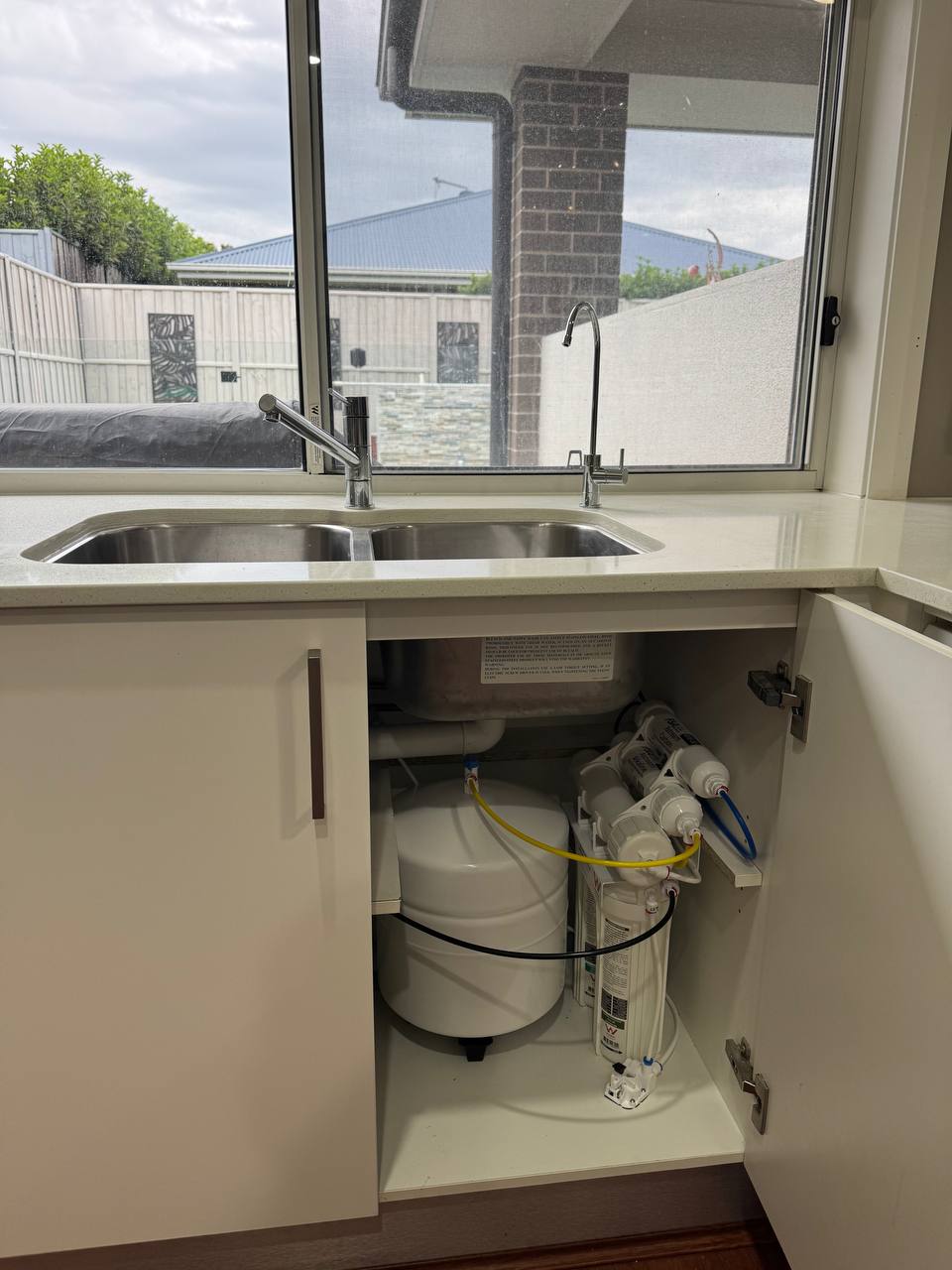
Reverse osmosis is widely recognised as the most effective residential technology for PFAS removal, and the research supports this position clearly. An RO system works by forcing water through a semi-permeable membrane with pores approximately 0.0001 microns in size — small enough to block dissolved contaminants at the molecular and ionic level, including PFAS compounds that pass straight through conventional filters.
Multiple peer-reviewed studies, including research published in environmental science journals and assessments by the US EPA and the Water Research Foundation, consistently show that certified reverse osmosis systems achieve 90–99%+ removal of the most common and studied PFAS compounds, including PFOA, PFOS, and many of their replacement chemicals. NSF International, which certifies water treatment products, has developed NSF/ANSI Standard 58 specifically for RO systems, with performance claims that now include PFAS removal testing for certified products.
It is worth contrasting RO with the alternatives. Activated carbon filtration — the technology in most standard under-sink carbon block filters — can achieve 50–80% removal of some longer-chain PFAS compounds, but is significantly less effective against shorter-chain PFAS such as GenX (HFPO-DA), which are increasingly prevalent as replacements for older compounds. Basic sediment filters and chlorine reduction cartridges provide virtually no PFAS removal at all. If PFAS removal is your primary goal, reverse osmosis is the recommended technology without qualification.
The Pure Plus+ 5-Stage Reverse Osmosis ($840, supply and installation included) is the recommended system for PFAS removal in Sydney homes. For those seeking even greater protection, the Pure Premium 7-Stage RO ($1,180) adds an alkaline remineralisation stage and provides comprehensive multi-contaminant removal.
Whole House PFAS Filtration — The HPF-3 System
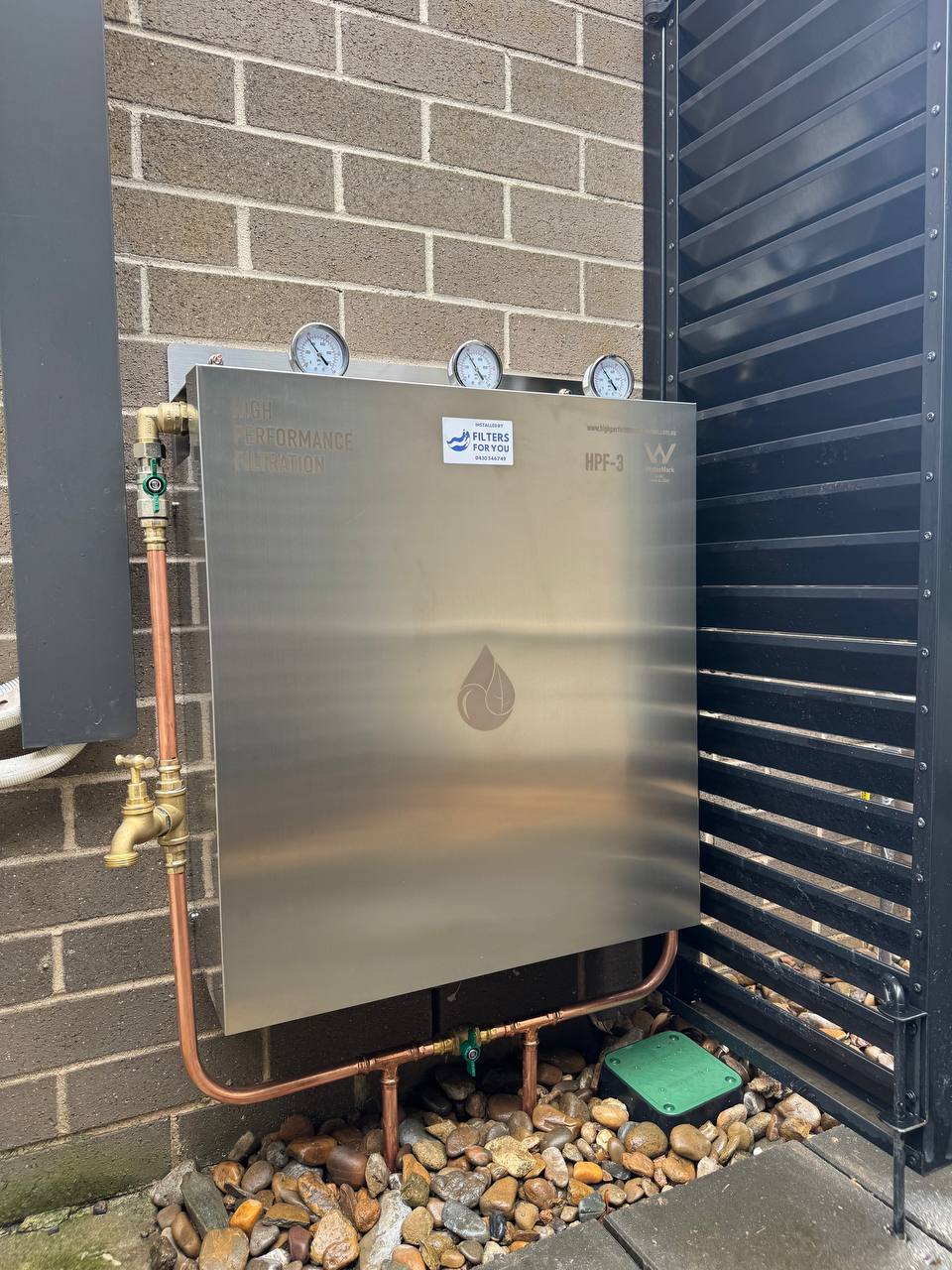
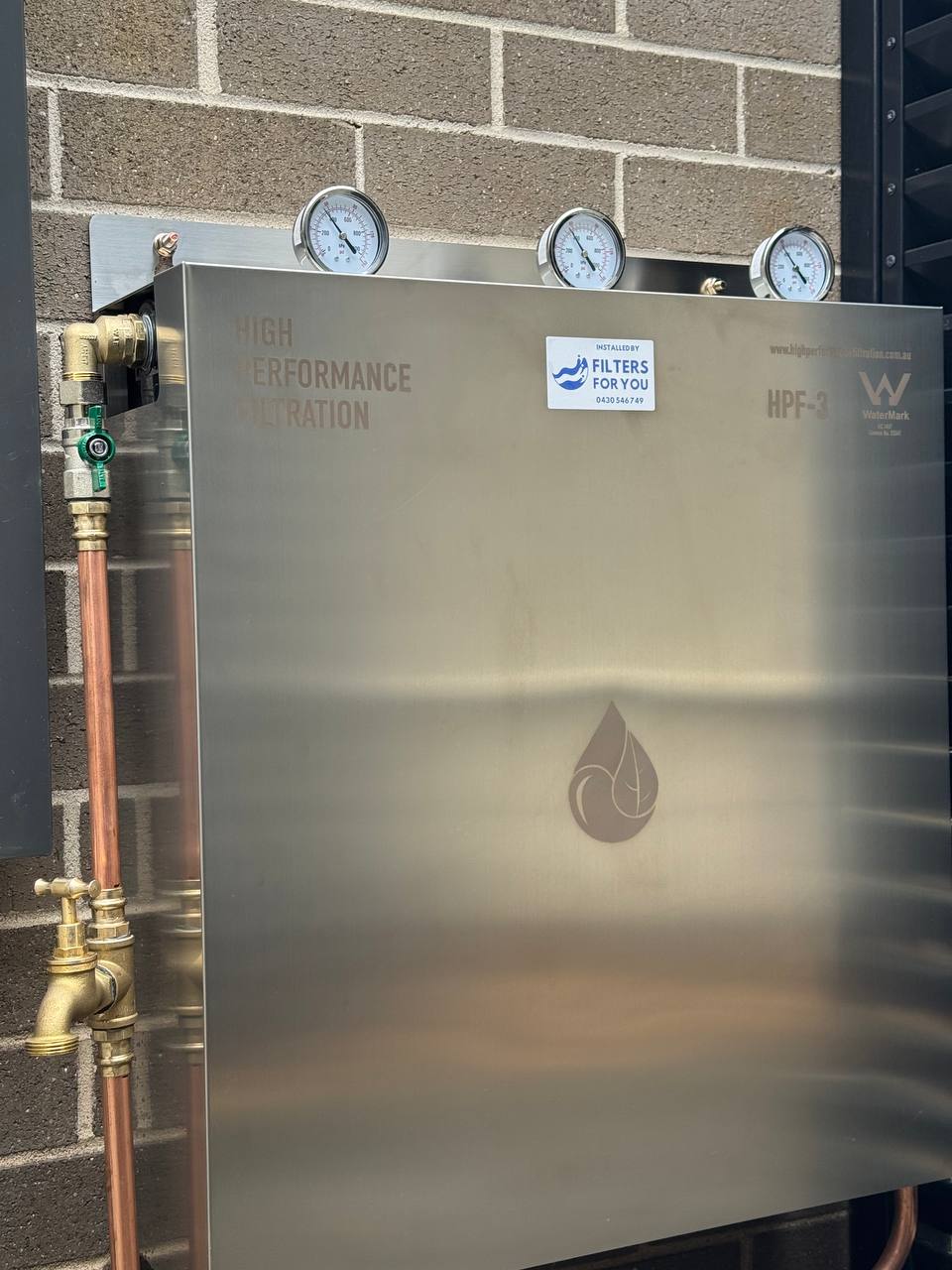
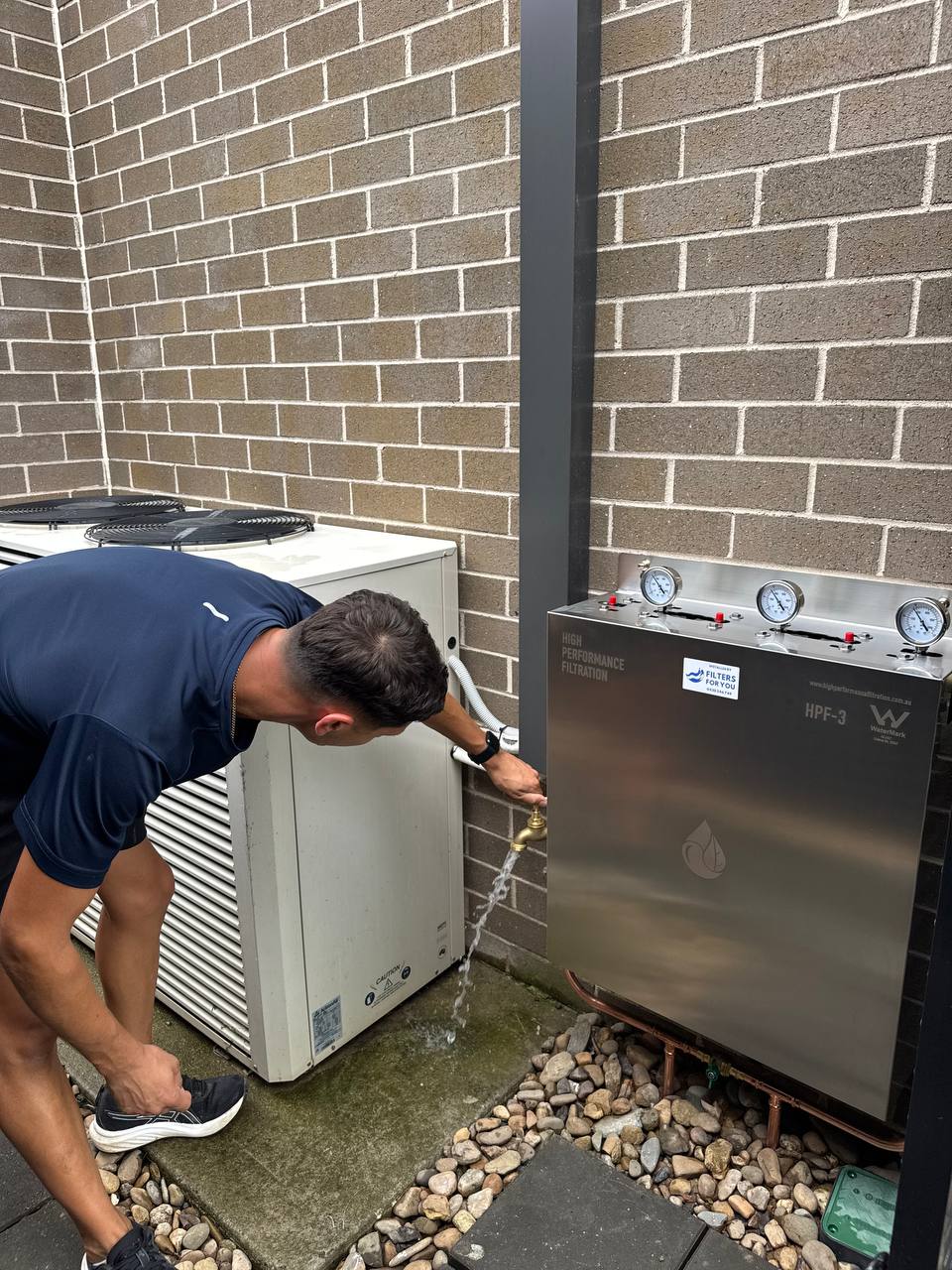
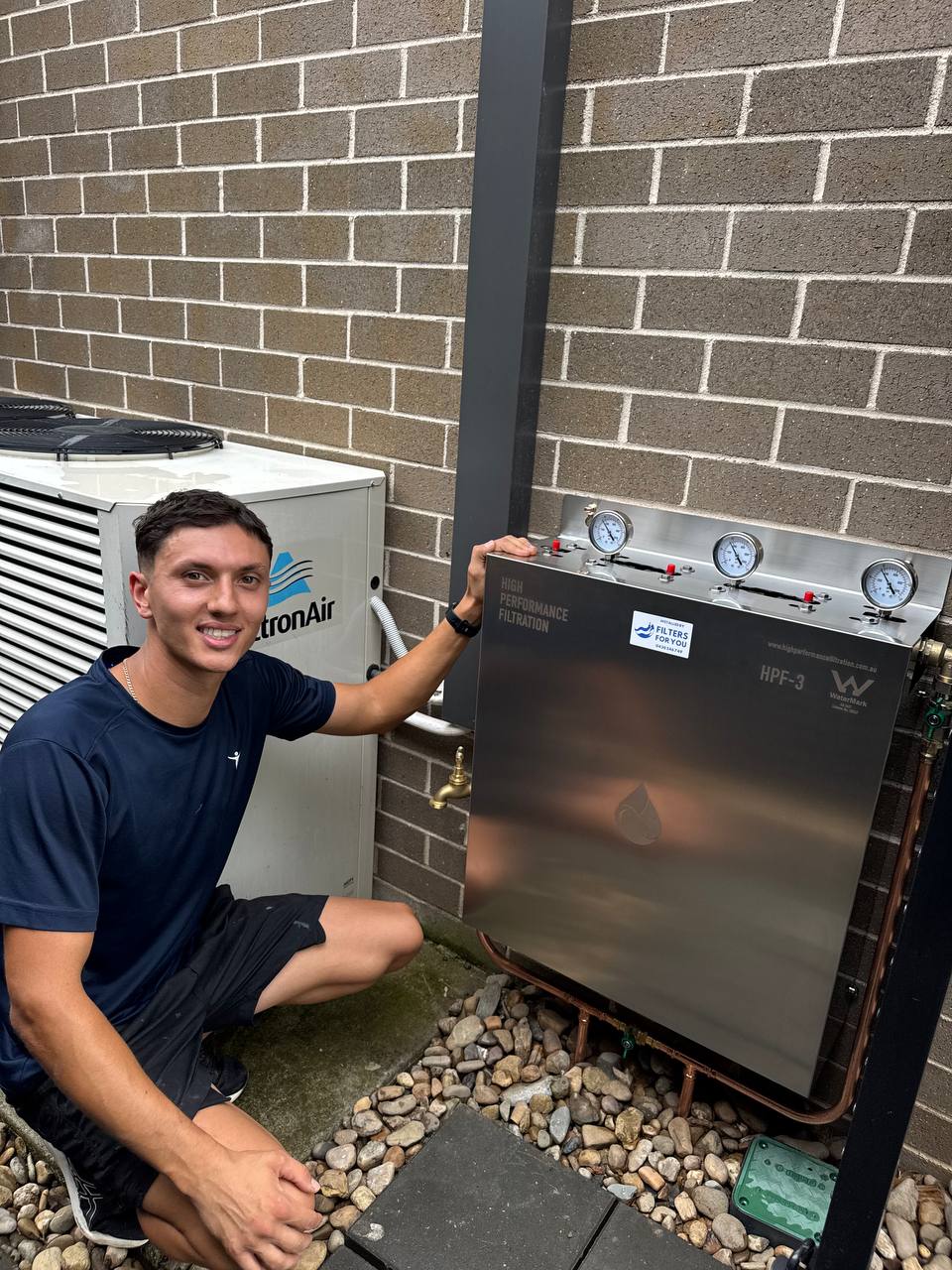
For families who want whole-home PFAS protection — covering every shower, bath, tap, and appliance — the HPF-3 High Performance Filtration System provides mains-level filtration for the entire property. Installed at the point where the water supply enters the house, the HPF-3 uses high-capacity media filtration including sediment, activated carbon, and specialty media to reduce PFAS and a wide range of other contaminants across every outlet in the home.
The HPF-3 is particularly relevant for families concerned about not just drinking water but also the water used for bathing and showering. Research suggests that skin absorption and inhalation of steam during showering are additional pathways for chemical exposure, and whole-home filtration addresses these alongside the kitchen tap. The system is best suited to houses with an accessible water meter or mains connection point, and installation typically takes 2–3 hours. Pricing ranges from $3,050 to $3,350 depending on installation conditions, and includes supply, Jean-Paul's professional installation, and a lifetime workmanship warranty. Jean-Paul has installed HPF-3 systems across Greater Sydney and will assess your property's suitability during a consultation.
PFAS Filter Areas in Sydney — Who Should Filter?
Based on the August 2025 PFAS report, Jean-Paul makes the following recommendations by location. North Richmond and Richmond residents should treat this as the highest priority area — North Richmond was specifically named in the investigation and the surrounding Hawkesbury region has documented contamination history. Ryde residents should also treat this as high priority — Ryde was named among the sampling locations and is a densely populated inner-city area with significant water demand.
Residents in the Prospect and Potts Hill areas form the third priority group — both were identified in the sampling data and Prospect Reservoir's central role in the Sydney supply network means PFAS detected there is relevant to a wide downstream area. Beyond these named locations, all Greater Sydney households should consider PFAS filtration as a sensible precautionary measure. PFAS contamination is not limited to the named sites — it is a widespread environmental issue and the 2025 report identified 31 separate compounds, demonstrating the breadth of the problem.
Jean-Paul installs reverse osmosis and whole house systems across all of these areas and across Greater Sydney within 20km of Croydon Park. If you are in any of the named areas or simply want the peace of mind of knowing your family's drinking water is protected, call 0430 546 749 to book.
Book PFAS Water Filter Installation in Sydney
Jean-Paul Barber from Filters For You installs PFAS-removing water filtration systems across Greater Sydney. Every installation is carried out personally by Jean-Paul — NSW Licensed Plumber 461511C — with fixed pricing that includes supply, installation, a full system walkthrough, and a lifetime workmanship warranty. Reverse osmosis systems start from $840. Whole house HPF-3 protection starts from $3,050. There are no hidden fees and no upsells on the day. Call 0430 546 749 (Mon–Sat 7am–6pm) or complete the quote form below. Most installations are scheduled within one week.